
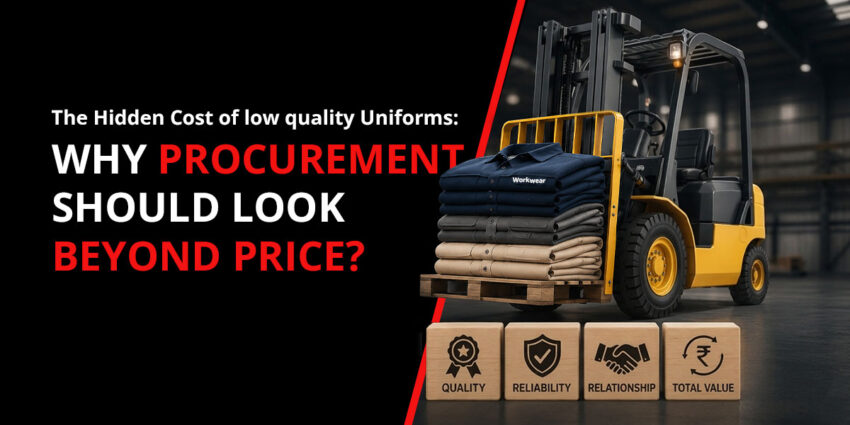
In uniform procurement, price is often one of the first factors considered during supplier evaluation
While cost control remains an important procurement objective, focusing solely on the lowest quotation can sometimes lead organisations to overlook factors that have a far greater impact on long-term value
The true cost of a uniform is not determined at the point of purchase
It is determined by how the garment performs throughout its lifecycle
Looking Beyond Initial Procurement Cost
When evaluating a corporate uniform supplier or workwear supplier, the lowest purchase price does not always represent the lowest overall cost.
Uniforms that require frequent replacement, generate recurring employee complaints, or create inconsistencies across locations can increase operational complexity over time.
As organisations grow, these challenges become increasingly visible through:
- Additional replacement orders
• Inventory management requirements
• Administrative effort
• Inconsistent employee presentation
• Supplier coordination across multiple locations
These factors may not appear on a quotation sheet, but they contribute significantly to the overall cost of ownership.
The Importance of Consistency
For businesses operating across multiple branches, facilities, or project sites, consistency is a critical requirement.
Uniforms play an important role in maintaining a professional appearance and reinforcing brand standards.
However, maintaining consistency becomes difficult when garments vary in colour, fit, fabric quality, or construction across different production batches.
This is why many organisations view supplier reliability and quality consistency as key criteria during uniform procurement decisions.
Procurement Should Consider Lifecycle Value
Modern procurement practices increasingly focus on long-term value rather than purchase price alone.
Questions such as the following are becoming increasingly relevant:
- How long will the garments remain presentable?
• Can quality be maintained across future orders?
• Is the supplier capable of supporting organisational growth?
• Will replacement requirements remain manageable over time?
Whether procuring corporate apparel, customised workwear, or industrial uniforms, organisations benefit from evaluating lifecycle performance alongside initial cost
Selecting the Right Uniform Partner
A reliable corporate uniform supplier contributes more than garment production
They help organisations maintain consistency, support operational efficiency, and simplify procurement processes as requirements evolve
At Brij, we provide customised uniforms, industrial uniforms, and professional workwear solutions designed to support long-term performance, consistency, and scalability across industries
Because effective uniform procurement is not simply about achieving the lowest purchase price
It is about achieving the greatest long-term value
FAQ
- How can low-quality uniforms increase business costs?
Low-quality uniforms often lead to frequent replacements, additional procurement cycles, inventory management challenges, and inconsistencies across teams, increasing the overall cost of ownership
- What should businesses look for in a corporate uniform supplier?
Businesses should evaluate consistency, production capability, scalability, delivery reliability, and the supplier’s ability to support long-term uniform programmes across multiple locations
- Why is consistency important in uniform procurement?
Consistent uniforms help maintain brand standards, ensure a professional appearance across locations, and reduce complications when managing future orders and replacements