
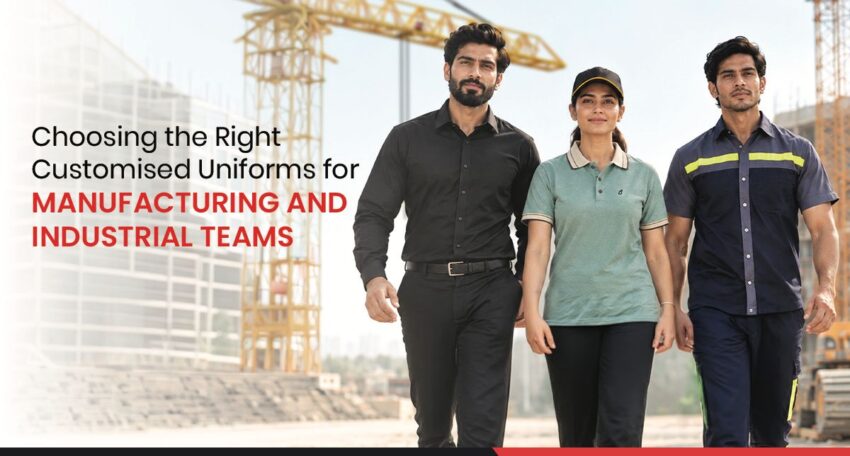
Choosing the Right Customised Uniforms for Manufacturing and Industrial Teams
Choosing uniforms for a manufacturing or industrial team sounds simple until you have hundreds of employees, different roles and different working environments to consider.
A uniform needs to do more than carry a logo. It needs to be comfortable enough for long working hours, practical for everyday tasks, consistent with the brand and manageable at scale.
And when one company has production teams, warehouse staff, supervisors, maintenance teams and management, finding one uniform that works equally well for everyone can become a challenge.
So, how do you choose a uniform that actually works for your entire workforce?
Why Can a Uniform That Looks Good on Paper Fail in Practice?
A sample can look perfect in a catalogue or presentation.
But manufacturing and industrial teams don’t wear uniforms for a presentation. They wear them for hours, through regular movement, repeated washing and everyday work.
What looks good on a sample may not always feel right after an entire working day.
For example, a production employee may need a uniform that allows easy movement, while someone working in a warehouse may have different functional requirements. A supervisor may regularly move between the shop floor and office, while a customer-facing team may need a more polished appearance.
There is also the question of durability.
A uniform that starts losing its shape, colour or overall appearance after repeated use can quickly affect how a workforce looks as a whole.
This is why choosing customised uniforms should begin with understanding the people who will actually wear them.
What Should You Consider Before Choosing a Uniform?
The right uniform starts with the work environment, not just the company logo.
Here are some of the key factors businesses should consider.
1. Fabric and Comfort
Employees can spend most of their working day in their uniforms, making fabric one of the most important decisions.
Breathability, durability, comfort, maintenance and the working environment all need to be considered.
A lightweight fabric might work well for a particular environment, while another workplace may require something more durable.
The important thing is to choose fabric based on how the uniform will actually be used, rather than simply how it looks.
2. Fit and Functionality
A uniform should allow employees to do their jobs comfortably.
Fit, movement, pocket placement, sleeves, collars and garment construction can all make a difference during a long working day.
For industrial teams, even small design decisions can affect everyday usability.
A pocket in the wrong place, restrictive sleeves or an uncomfortable fit might not seem important when approving a sample. But after several hours of work, those details become much more noticeable.
3. Branding and Design
A uniform is also a visible part of the company’s identity.
Colours, logos and design elements can create consistency across different teams and locations.
But branding doesn’t mean putting a logo on every garment and stopping there.
The design should feel like an extension of the company’s identity while remaining practical for employees.
The goal is simple:
Make the uniform recognisably yours without making it difficult to wear.
Do Different Teams Need Different Uniforms?
Not necessarily completely different uniforms — but they may need different variations.
A manufacturing company could have production teams, warehouse staff, maintenance teams, supervisors, logistics teams and management, all working under the same brand.
Their requirements can still be different.
A production team might wear a practical shirt or polo.
A warehouse team may need a design that allows greater movement.
A maintenance team may have different functional requirements.
Supervisors could have a different variation while staying within the same visual identity.
Management may need something more suited to customer-facing interactions.
Same brand. Different requirements.
That is where customisation becomes useful.
And this becomes even more relevant in the automotive industry.
Automotive businesses bring together production, assembly, quality, logistics, maintenance, dealership and after-sales teams — each with a different working environment and different day-to-day requirements.
A uniform designed for a manufacturing floor may need to prioritise movement, durability and workplace requirements, while a dealership or after-sales team may need a more polished, customer-facing look.
One industry. Different workplaces. Different needs.
How Do You Manage Uniforms for Large Teams?
For a small team, ordering uniforms can be relatively straightforward.
For hundreds or thousands of employees, it becomes a much bigger operational exercise.
Businesses may need to manage:
- Different sizes and fits
- Multiple departments
- New employees joining the organisation
- Replacement requirements
- Different locations
- Repeat orders
- Consistent branding
- Changing workforce requirements
And this is where many uniform programmes face a challenge.
The first order may be easy.
The real test comes six months or a year later.
What happens when a new location opens?
What happens when 100 new employees join?
What happens when an employee needs a replacement?
The uniform programme needs to be able to accommodate these changes without losing consistency.
What Happens When You Need to Reorder?
Imagine your uniform was finalised last year.
Now you need another 200 pieces.
Will the fabric be the same?
Will the colour match?
Will the logo placement remain consistent?
Will the fit and design remain the same?
Will the new uniforms look like they belong to the same programme?
These questions become particularly important when businesses operate across multiple locations or manage large teams.
This is why customised industrial uniforms should not be treated as a one-time purchase.
The design needs to be repeatable.
The specifications need to be clear.
And the process needs to support future requirements.
Getting the first order right is important. Making the next order just as consistent is even more important.
How Should Workwear Fit Into Workplace Safety?
In manufacturing and automotive environments, workwear isn’t only about how a team looks.
The workplace itself needs to influence what employees wear.
Depending on the role and environment, factors such as visibility, movement, durability, comfort and protection may need to be considered alongside the company’s branding.
A production floor, warehouse, service area and dealership don’t necessarily have the same requirements.
So the question isn’t only:
“Does this uniform look right?”
It is also:
“Does it make sense for the workplace?”
That is where thoughtful workwear design becomes part of the larger workplace safety conversation — particularly in industries where employees spend long hours in operational environments.
How Businesses Can Get Their Uniform Programme Right
Experience across different industries can make a difference when uniform requirements become more specific.
For automotive and manufacturing teams, this means understanding that production, logistics, maintenance, supervision and customer-facing roles may all require different considerations.
This approach is particularly relevant to the automotive sector, where the workforce can span manufacturing plants, dealerships, service and after-sales teams.
We have worked with automotive brands including Honda, Kia and Morris Garages, developing uniforms around different team and workplace requirements.
And the relationship doesn’t end with the first order.
For large workforces, replacements, repeat orders, new employees and ongoing support are all part of the experience. This commitment to support was also recognised via certifications by Morris Garages with a Best After-Sales Support Award.
This year, that experience is coming to OSH India for the first time, where the conversation around workwear connects naturally with a wider focus on workplace safety and industrial requirements.
7–9 October 2026 | Bombay Exhibition Centre, Goregaon (E), Mumbai
Hall 3 | Stall A20
The Right Uniform Is More Than a Logo on a Shirt
For manufacturing and industrial businesses, uniforms sit at the intersection of people, functionality and brand identity.
The right choice should work for the employee wearing it, the business managing it and the brand representing it.
That means looking beyond colour and logo placement.
Fabric, comfort, fit, functionality, durability, customisation and long-term consistency all matter.
And when these elements come together, a uniform stops being just another item of workwear.
It becomes part of how a business looks, works and presents itself every day.
FAQs
1. What are customised uniforms?
Customised uniforms are workwear designed around a company’s brand identity and the specific requirements of its employees or teams.
2. Why are customised uniforms important for manufacturing teams?
Manufacturing teams often work across different roles and environments. Customised uniforms can help businesses address these requirements while maintaining a consistent brand identity.
3. What is OSH India?
OSH India is an industry exhibition focused on occupational safety and health, bringing together businesses and professionals from sectors such as manufacturing, engineering, construction and other industrial fields.
4. Is Brij participating in OSH India 2026?
Yes. This will be the first time the company is participating in OSH India. The event will take place from 7–9 October 2026 at the Bombay Exhibition Centre, Goregaon, Mumbai, with the team at Hall 3, Stall A20.
5. What should businesses consider when choosing industrial uniforms?
Businesses should consider the working environment, fabric, comfort, fit, functionality, durability, branding, workforce size and future replacement or repeat-order requirements.