
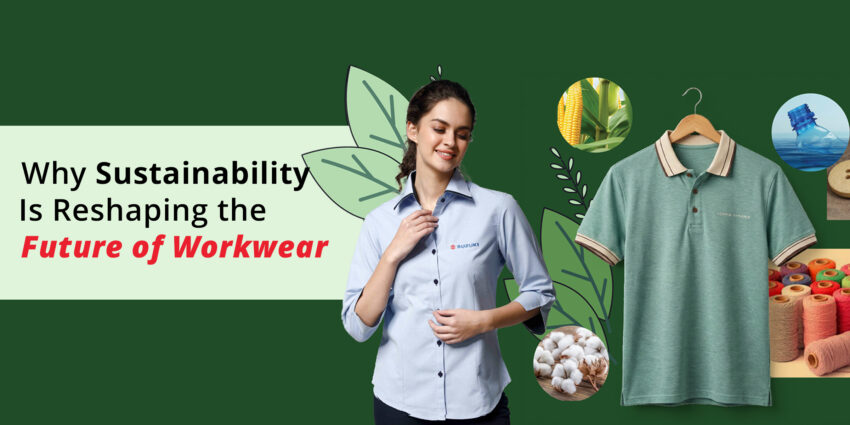
Sustainability is no longer just a trend; it has become a business priority.
The global textile industry generates an estimated 92 million tonnes of textile waste every year, highlighting the need for better materials, longer-lasting products, and circular solutions.
As organisations strengthen their ESG commitments, they’re rethinking every aspect of their operations, including the uniforms employees wear every day.
For years, workwear was chosen based on cost, appearance, and functionality. Today, businesses are asking a new question:
Can workwear also be more sustainable?
Why Workwear Is Becoming Part of the Sustainability Conversation
Corporate uniforms are worn every day across industries—from manufacturing plants and healthcare facilities to hospitality and corporate offices.
Because they are used, washed, and replaced regularly, uniforms have a larger environmental impact than many organisations realise.
Today, businesses are looking beyond price and performance. They’re also considering how workwear can support their sustainability goals while maintaining the quality and durability employees expect.
For procurement and sustainability teams, the conversation is no longer just about buying uniforms.
It’s about making responsible choices that create long-term value.
What Makes Workwear More Sustainable?
Sustainable workwear is about much more than choosing recycled fabrics.
It considers the entire lifecycle of a garment—from how it’s sourced and manufactured to how long it lasts before being replaced.
Some of the key factors include:
- Responsibly sourced materials
- Durable construction
- Recycled or lower-impact fabrics
- Reduced textile waste
- Circular apparel practices
One of the most overlooked aspects of sustainability is durability.
Uniforms that last longer require fewer replacements, helping organisations reduce waste while improving resource efficiency over time.
How Brij Is Contributing
At Brij, we believe sustainability should go hand in hand with performance.
That’s why initiatives like Recocool and Recoso focus on developing workwear solutions that combine sustainability, comfort, durability, and functionality.
By exploring recycled and responsibly sourced materials, we’re working towards creating uniforms that support both business performance and environmental responsibility.
Because sustainable workwear should never require organisations to compromise on quality.
The Green Stitch Challenge
Innovation begins with new ideas.
To encourage fresh thinking around sustainable workwear, Brij launched the Green Stitch Challenge.
The initiative invites students, designers, and innovators to imagine what the next generation of workwear could look like.
Participants are encouraged to explore ideas around:
- Sustainable materials
- Employee comfort
- Functional workwear
- Circular thinking
- Modern workplace needs
Last date for submission: 24th July, 2026
By bringing together new perspectives, the challenge aims to inspire solutions that contribute to a more sustainable future for the workwear industry.
Looking Ahead
The future of workwear will be shaped by better materials, smarter manufacturing, and ideas that balance sustainability with performance.
Creating that future requires collaboration between businesses, manufacturers, and the next generation of innovators.
At Brij, initiatives like Recocool, Recoso, and the Green Stitch Challenge reflect our commitment to building workwear that’s better for businesses, better for employees, and better for the planet.
Frequently Asked Questions
Why is sustainable workwear important for organisations?
Sustainable workwear helps organisations reduce environmental impact while supporting durability, comfort, and responsible procurement practices.
How does durability contribute to sustainability?
Long-lasting uniforms require fewer replacements, helping reduce textile waste and improve resource efficiency over time.
What is the Green Stitch Challenge?
The Green Stitch Challenge is Brij’s initiative that encourages students, designers, and innovators to develop ideas that shape the future of sustainable workwear.