
Why Does Every Workplace Need a Different Approach to Head Protection?
Think about a worker moving through a warehouse.
They are checking stock, moving between storage racks and working around machinery. There may be no risk of heavy objects falling from above, but there are plenty of fixed surfaces they could accidentally hit their head against.
Now think about a construction worker working below an active site where tools and materials could fall.
Both workers need head protection. But do they need the same kind?
Not necessarily.
This is where the difference between a bump cap and a safety helmet becomes important.
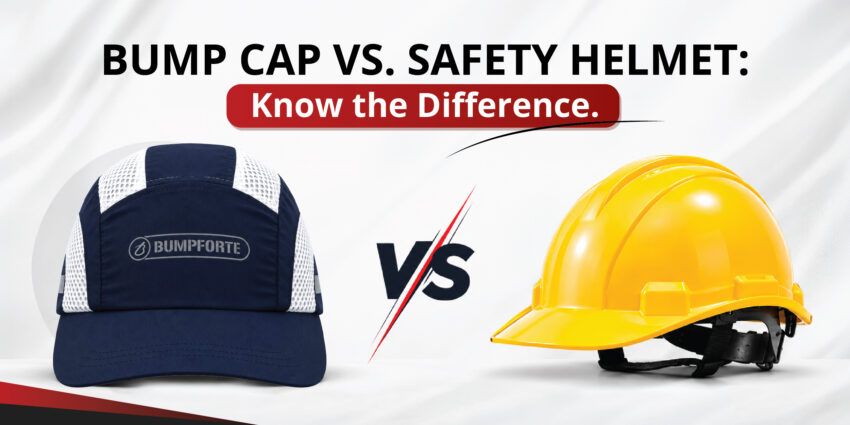
While safety helmets are designed for hazards such as falling objects, industrial bump caps are designed to protect against minor impacts caused by striking the head against hard, stationary objects.
The right choice isn’t always the bigger piece of equipment. It’s the one that matches the risks of the job.
What Is a Bump Cap?
A bump cap is a type of industrial head protection designed to help protect workers from minor bumps and knocks against fixed objects.
It is particularly relevant in workplaces where employees regularly move around storage racks, machinery, equipment, pipes and other fixed structures.
Unlike a traditional safety helmet, a bump cap has a cap-like design and is generally lighter and more compact.
This makes it a practical option for suitable work environments where workers need head protection throughout their shift but are not exposed to falling-object hazards.
An important distinction: bump caps are not designed to protect against falling or thrown objects, or moving and suspended loads.
Bump Cap vs Safety Helmet: What Is the Difference?
The biggest difference comes down to the type of workplace hazard each product is designed to address.
| Factor | Industrial Bump Cap | Safety Helmet |
|---|---|---|
| Primary purpose | Protection against minor bumps from fixed objects | Protection against hazards such as falling objects |
| Common work environments | Warehouses, manufacturing and maintenance areas | Construction sites and other high-risk work areas |
| Design | Cap-like, lightweight construction | Protective helmet with a shell and suspension system |
| Relevant standard | EN 812 | EN 397 |
| Typical risk | Hitting the head against a shelf, pipe or fixed structure | Being struck by a falling tool or material |
The two products serve different purposes. Neither should be selected based only on appearance, comfort or price.
The workplace risk assessment should always guide the decision.
5 Reasons a Bump Cap Can Be a Practical Choice for the Right Workplace
When the main concern is accidental contact with fixed objects, a bump cap offers several practical advantages.
1. Lightweight for Everyday Wear
Workers may need to wear head protection for several hours a day.
A lighter, cap-like design can make a difference to everyday comfort, particularly in workplaces where a full industrial safety helmet is not required by the risk assessment.
2. Better Suited to Restricted Workspaces
Warehouses, production areas and maintenance spaces often have fixed structures that workers need to move around.
Storage racks, overhead pipes, machinery and low-clearance areas can all create opportunities for accidental head contact.
A bump cap is designed for this type of risk.
3. A More Compact Design
A bump cap has a smaller, more familiar profile than a traditional safety helmet.
For suitable work environments, this can make it easier to wear during routine tasks that involve frequent movement around equipment and storage areas.
4. Ventilation and Everyday Comfort
Comfort matters when protective equipment is worn throughout a shift.
A ventilated bump cap design can support airflow and make everyday wear more comfortable.
However, ventilation and comfort should always come after checking that the product provides the protection required for the job.
5. Designed for a Specific Safety Requirement
Not every head injury risk comes from falling objects.
Sometimes, the concern is a worker accidentally hitting their head against a stationary structure.
Industrial bump caps are designed specifically for this type of risk, making them a relevant option when the workplace assessment identifies that level of protection as appropriate.
Where Can Industrial Bump Caps Be Used?
A bump cap can be considered in work environments where the main risk is minor impact against fixed objects and there is no exposure to falling-object hazards.
Some examples include:
Warehouses: Workers moving between storage racks, shelves and equipment.
Manufacturing facilities: Employees working around machinery, production equipment and fixed structures.
Maintenance operations: Teams carrying out indoor maintenance around pipes, equipment and restricted spaces.
Logistics areas: Workers moving through storage and distribution spaces where accidental head contact may occur.
These are examples, not automatic recommendations. Each workplace must assess its own hazards before deciding on the appropriate head protection.
When Should You Choose a Safety Helmet Instead?
This is an important distinction.
A bump cap should never be treated as a replacement for a safety helmet.
If workers are exposed to falling tools, materials, suspended loads or other hazards requiring industrial safety helmet protection, a suitable safety helmet is necessary.
For example, construction sites and areas where materials are being lifted or handled overhead may require safety helmets that meet the relevant standard.
The choice should always begin with a workplace risk assessment.
A bump cap is for minor impacts against fixed objects. A safety helmet is for more demanding impact hazards.
Choosing correctly matters more than choosing one over the other.
Meet BUMPFORTE by Brij: Designed for Everyday Industrial Requirements
For workplaces where a bump cap is the appropriate choice, Brij brings BUMPFORTE into the picture.
BUMPFORTE is an EN 812-certified industrial bump cap designed for protection against minor bumps and knocks caused by contact with stationary objects.
Its design brings together:
- ABS shell: A protective outer shell.
- Lightweight construction: Designed with everyday wear in mind.
- Ventilation: Supports airflow during use.
For businesses looking to equip teams working in warehouses, manufacturing facilities and suitable maintenance environments, BUMPFORTE offers a practical head protection option.
It is not about replacing the safety helmet. It is about recognising that different work environments call for different types of protection.
Frequently Asked Questions
1. What is the main difference between a bump cap and a safety helmet?
A bump cap is designed to protect against minor bumps caused by striking fixed objects. A safety helmet is designed for workplace hazards such as falling objects and other higher-impact risks.
2. Can a bump cap replace a safety helmet?
No. A bump cap does not provide the same level of protection as an industrial safety helmet. It should not be used where falling-object protection is required.
3. What is EN 812 certification?
EN 812 is the European standard that specifies the physical and performance requirements, testing methods and marking requirements for industrial bump caps.
4. Where are bump caps commonly used?
They may be suitable for warehouses, manufacturing facilities, logistics areas and maintenance operations where the main risk is accidental contact with stationary objects.
5. Are bump caps comfortable for long working hours?
Bump caps are generally lighter and more compact than industrial safety helmets. Features such as ventilation can also support comfort during everyday use. The suitability of the product should still be determined by the workplace risk assessment.
6. What is BUMPFORTE by Brij?
BUMPFORTE is an EN 812-certified industrial bump cap by Brij. It features an ABS shell, lightweight construction and ventilation, and is designed for workplaces where protection against minor bumps is required.
The Right Protection Starts With the Right Choice
Workplace safety isn’t about choosing the same equipment for everyone. It is about understanding the risks people face while doing their jobs.
For some environments, a safety helmet is essential. For others, where the risk is limited to minor bumps against fixed structures, an industrial bump cap can be the more suitable option.
With BUMPFORTE, Brij offers businesses an EN 812-certified option designed around this everyday industrial requirement.
Because good workplace protection starts with understanding the work.